The Trickster at the Crossroads


We define a challenge or a problem as a thing, usually singular. But when we look a bit closer, what we find is not one thing but two, or many — pulling us in different directions. We can stand at the crossroads trying to play out every scenario before making a choice. A choice brings us to a side, and with it the irreversibility of time and consequence. The threshold is where the known becomes the unknown. We cannot reside there long — even the gods keep to their respective domains.
We all know this place. The pending decision to choose a career. The silence of whether to stay or leave a meaningful relationship. To reside in a life pattern that keeps you safe, or to step into a new, uncertain experience. To tell a young child a difficult truth — or keep their world innocent just a moment longer. The scenarios are endless. The great stories have always known of the energy that resides at the crossroads. And there is a great irony there: we feel we stand alone, but there is always a figure present — always.
Our oldest stories have given this figure its faces. The animal that speaks to us with a question. The dwarf that sets a task. The sphinx with a riddle. The beggar that seems to know more. The dark figure offering a choice — or a temptation. And some faces are so constant that every culture speaks through the same images: the fox, the raven, the coyote, the devil. Sometimes it even borrows the mask of the crone or the wise old man, wearing wisdom as a disguise.
The Trickster is the archetypal energy that comes to life at the thresholds. When two domains touch, there is a figure that defines the space in between. Marie-Louise von Franz, Jung's closest collaborator, said the Trickster was there at the beginning — at creation itself. But is this to say that deception is the foundation of creation? One strand of the word's etymology suggests trickery, deceit. Are we victims of a larger force taking advantage of our confusion? It can certainly seem that the devil at the crossroads has no benevolent intentions. Yet, the term discloses an older truth: beneath the deceit lies the Latin root tricae — entanglements, knots, and confusions. The Trickster's business is not the lie. It is the tangle — and what it tangles, and pulls us from, is the known, the repetitive pattern, certainty, and at the heart — our identity.
The Trickster seems to know more than the one standing at the crossroads — it knows the terrain on the other side, though it may not know itself. What it offers is a paradox. On the one hand, it draws you away from the known, toward a dissolution of identity that cannot be undone. On the other, it traps you long enough to feel the tension — the pulling of the two opposing sides. There is a real immobility in indecisiveness. The tension holds, and we need a release; the Trickster uses that need to force the choice, and choices forced by tension are made in haste. Fool's gold always looks convincing at first.
The Trickster stands at the thresholds and seems to know the landscape from all directions — and where they meet. Is this, then, an omniscient figure? Here lies one of the great psychological paradoxes. The Trickster who resides in the thresholds is subject to the same governing laws. Despite all it knows, the figure has a blind spot, and can fall victim to its own traps. Jung called the trickster "both subhuman and superhuman, a bestial and divine being" — bestial in its impulsive, largely unconscious action; divine in the archetypal energy that was present at the beginning. The Trickster cannot escape its own fate.
So what does it mean to meet a psychopomp that is sometimes blind to its own actions? Here lies an important distinction. The Trickster conducts us from the known into the unknown — it brings us to the crossing, but it does not counsel us there. It is not the archetypal energy of the helpful animals in fairy tales, nor the wise old man or woman, nor the figure that guides us toward our full potential. The Trickster is not our daimon. And yet it resides in great archetypal energy, for life is indeed filled with the tension of opposites. The greatest gift the Trickster gives us may sometimes feel like a curse. But without this energy pulling us into the dynamic world of tension, we shall only know one side of life. The comfort we seek is our own trap — and we shall remain in a cloistered world, seeing everything and experiencing nothing.
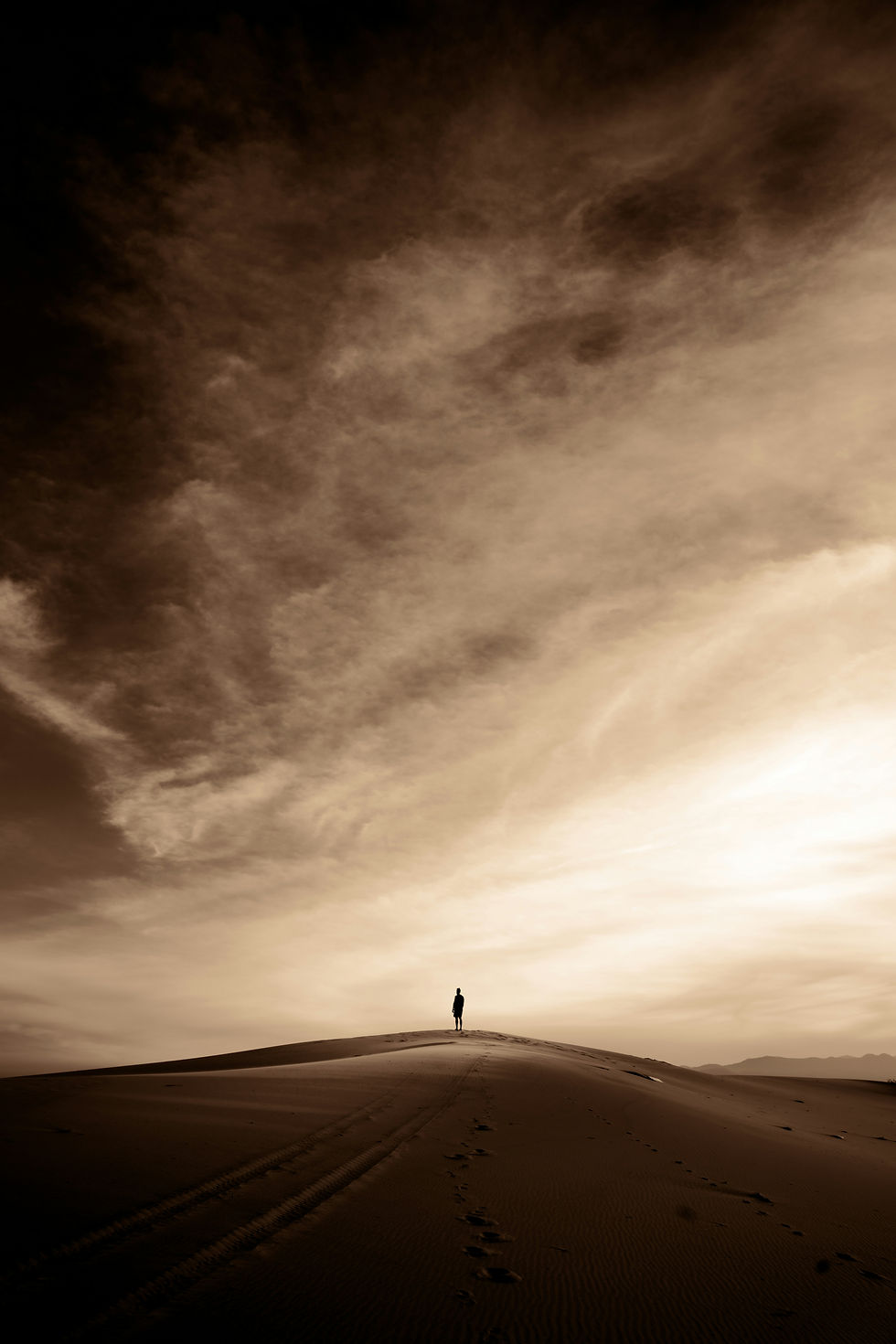
And if we are brave enough to meet it at the crossroads — to speak with the Trickster knowing its words cannot always be trusted — and we dare to venture on anyway, we go into the great unknown. And if we go willingly, with the humility that we are in the presence of something larger than ourselves and do not know the path, sometimes the Trickster guides us to the wise ones — the ones who show us the way into the beyond, and the way back home. And if, on the journey home, we find a trickster caught in its own trap — release it. It will be sure to tell you a tale once more.
Comments